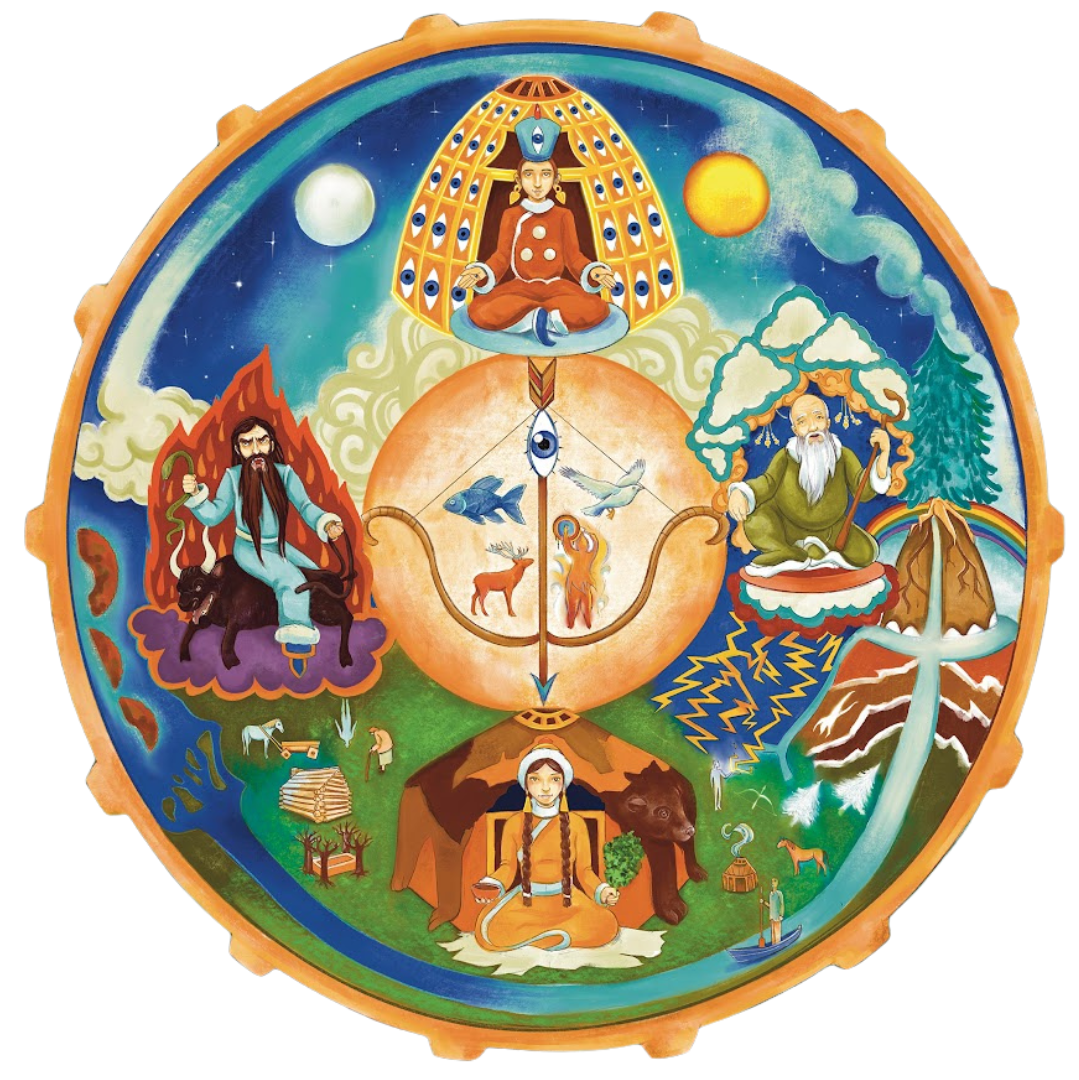
There are moments in life when we need to make a decision, but the answer does not come. We think, we analyze, we imagine different futures, and still something inside remains unclear. One option seems right for a moment, then another option appears. We ask friends, we make lists, we try to be reasonable, and yet the body still feels tense, the heart still feels heavy, and the mind keeps moving in circles.
When this happens, we often believe that the problem is that we have not thought enough. So we try to think more. We sit with the same question again and again. We look for the perfect reason, the perfect plan, the perfect guarantee. But sometimes more thinking does not bring more clarity. Sometimes it only makes the confusion louder.
This is because a decision is not made only by the mind. It is also made by the state we are in. If we are afraid, our mind will mostly see danger. If we feel trapped, our mind will mostly see walls. If we feel small, tired, or contracted, the future may look small too. Not because the future is truly small, but because we are looking at it from a closed place.
The central teaching is very simple: before we ask, "What should I choose?", we need to ask, "From what state am I choosing?" This question changes everything. It invites us to stop treating clarity as a mental problem and to begin seeing it as something connected to our whole being: body, emotion, energy, perception, and inner freedom.
The State We Choose From Matters
Every decision has an inner origin. Two people can make the same external choice, but from very different places inside. One person may leave a job because they are running away from fear. Another may leave because they feel a clear call toward a more honest life. One person may begin a relationship because they cannot be alone. Another may begin because love is truly opening in them. The action may look similar, but the inner movement is not the same.
This is why we need to become more sensitive to the state behind our decisions. A decision made from fear usually creates more fear. A decision made from shame often continues the same wound. A decision made only for comfort may make life easier for a while, but it may not bring real transformation. And a decision made from the creative center can open a new path that did not exist before.
In the webinar, this teaching is explained through three kinds of decisions. The first kind comes from pain. The second comes from comfort or pleasure. The third comes from the creative center. Understanding these three places can help us recognize what is really moving inside us when we are about to choose.
Decisions From Pain
A decision from pain is a decision that tries to escape an unpleasant feeling. The feeling may be fear, shame, anger, guilt, loneliness, scarcity, or pressure. We may not say it clearly, but inside there is often a hidden sentence: "If I fix this thing outside, I will stop feeling this pain inside."
Sometimes action is necessary. If a situation is harmful, dishonest, or truly not right for us, we may need to leave, speak, change, or protect ourselves. This is important. The point is not to stay in places that hurt us. The point is to notice whether the decision is coming from clarity or from reaction.
When pain is the one choosing, we are often not moving toward freedom. We are only moving away from discomfort. We may leave one situation, but carry the same wound into the next one. We may change the outside form of life, but repeat the same emotional pattern. We may think we are choosing peace, but actually we are choosing from panic.
This is why pain-based decisions can feel urgent. They want an answer now. They want relief now. They do not want to wait, breathe, feel, or look deeper. They say, "Do something quickly, so this feeling stops." But if we obey that voice too fast, we may create another situation that carries the same pain in a different costume.
The invitation is not to reject pain. Pain is not bad. Pain can be a messenger. It can show us where something needs attention. But pain should not be the only part of us allowed to make the decision. We can listen to it, care for it, and still wait until a deeper place in us becomes available.
Decisions From Comfort
The second kind of decision comes from comfort or pleasure. These decisions are also not bad. They may help us rest, simplify life, enjoy more, feel safer, or create more ease. Many good things in life come from this level. We choose a better routine, a nicer home, a more peaceful rhythm, a healthier environment, or a simpler way of working.
But comfort has a limit. Comfort can improve the life we already have, but it does not always create a new life. It can make the old path softer, but it may not open a new path. It can make the room more beautiful, but it may not take us out of the room.
This is very important when we are facing a big decision. If we only ask, "What feels easier?", we may choose the option that keeps us safe, but not alive. We may choose what reduces friction, but not what awakens the deeper call. We may choose what maintains control, but not what brings growth.
A life based only on comfort can slowly become small. Nothing terrible may be happening. Everything may look acceptable. But the energy of the new is missing. There is no adventure, no expansion, no real movement toward the person we are becoming. We are not in pain, but we are not fully alive either.
Comfort is useful. We need rest. We need tenderness. We need moments where life is simple and kind. But when the soul asks for transformation, comfort alone cannot guide us. For that, we need the creative center.
Decisions From The Creative Center
A decision from the creative center is different. It is not mainly trying to escape pain, and it is not mainly trying to preserve comfort. It comes from the desire to bring something new into life. It may feel like a call, a spark, a quiet excitement, a possibility, or a direction that has not yet become real.
This kind of decision may not be fully logical at first. It may not give us a perfect map. It may not promise control. In fact, the creative decision often asks us to step into something we cannot completely predict. That is why it can feel both alive and uncomfortable. It carries the energy of the new, and the new cannot be fully controlled.
Artists know this state well. A musician does not create a true song only from comfort. A writer does not write something alive only by trying to avoid fear. A painter does not paint a real work of beauty by staying completely safe. Creation asks for another state. It asks for openness, sensitivity, courage, and contact with something that wants to move through us.
The same is true with life decisions. To choose a new path, we need access to the part of us that can perceive the new. If that part is asleep, the creative option may be right in front of us and still remain invisible.
This is one of the most important ideas from the webinar: if we are not in a creative state, we cannot see the creative possibility. It is not that the creative option looks difficult. It is not that we simply have resistance to it. We may literally not perceive it. Our state decides what becomes visible.
Why Thinking More Can Keep Us Stuck
Most of us were taught to solve important questions by thinking. Thinking is useful. We need the mind. We need reflection, planning, and practical intelligence. But the mind can only work with what it can see. If our state is closed, the mind will make calculations inside a closed field.
Imagine trying to choose a path while standing inside a dark room. You can think very hard about where the door might be, but if there is no light, your thinking is limited. You may become more tense, more tired, and more frustrated. What you need first is not more effort. You need light.
The same happens inside us. If we are in fear and we think for hours, fear colors the thinking. If we are in scarcity, the mind finds reasons why there is not enough. If we are in guilt, the mind looks for punishment. If we are in habit, the mind repeats what it already knows. This is why thinking from the same state often gives us more of the same state.
There is a moment when the wise thing is not to continue thinking. The wise thing is to change state. This does not mean avoiding the decision. It means preparing ourselves to see it from a better place.
Before a big decision, the most important question may be very simple: "How am I right now?" Am I open or closed? Am I alive or flat? Am I choosing from fear, from comfort, or from creativity? Am I trying to escape something, preserve something, or create something true?
These questions do not give us the final answer immediately. But they show us whether we are ready to decide.
The Creative State Is A Living State
A creative state is not something strange or mystical in a complicated way. It is a living state. The body is awake. The emotions are moving. Expression is possible. We are not frozen inside ourselves. We are not only in the head. We are connected to life.
The webinar uses the image of the child to explain this. A child is naturally vital. A child moves, feels, expresses, asks, plays, reaches, laughs, cries, and begins again. A child does not need to create a long argument to know that they want to run toward something interesting. Life moves in them, and they respond.
Of course, as adults we need more maturity. We cannot simply follow every impulse. We have responsibilities, relationships, money, work, and consequences to consider. But we can learn from the child's state of aliveness. We can remember that clarity is not born only from control. Sometimes clarity comes when life is allowed to move again.
When we are in a creative state, perception changes. We may see an option that was hidden before. We may feel courage where before there was only heaviness. We may understand that the real question is not the one we were asking. We may suddenly know that the answer is simpler than we thought.
This does not mean that every decision becomes easy. It means that we are no longer trying to choose from a contracted place. We are choosing with more of ourselves present.
The Three Keys: Body, Emotion, And Expression
The webinar offers three simple keys for entering this creative state: vital activation, emotional activation, and free expression. These words may sound big, but the experience is very simple.
Vital activation means waking up the body. When the body is asleep, tense, or flat, the mind often becomes heavy too. A simple walk, deep breathing, stretching, dancing, training, or moving outside can begin to change the inner atmosphere. The body is not separate from clarity. Very often, when the body begins to move, life begins to move again inside the mind.
Emotional activation means allowing ourselves to feel. Many people try to make decisions while keeping their emotions locked away. They want to be rational, calm, and correct, so they push emotion down. But emotion is energy. If we block all emotion, we also block a large part of our creative intelligence.
To be emotionally active does not mean to be dramatic. It does not mean to explode or drown in feeling. It means to honestly notice what is alive inside. Fear may be there. Desire may be there. Sadness, anger, hope, love, excitement, tenderness, or grief may be there. When we allow the emotion to breathe, it becomes information and energy. It stops being a hidden force that controls us from the dark.
Free expression is the third key. This means letting what is inside move outward in a healthy way. We can write, speak, sing, pray, move, draw, cry, shake, or tell the truth out loud. The form is personal. What matters is that the inner pressure begins to flow instead of staying trapped.
When these three things come together, something opens. The body is awake, the emotions are alive, and expression is moving. We are no longer only a head trying to solve a problem. We become a whole person meeting life.
A Simple Way To Practice Before A Decision
Before making an important decision, we can create a small practice. It does not need to be complicated. It can take twenty minutes, one hour, or a whole day, depending on the size of the decision and the time we have.
First, pause and name your state. You might say, "I am afraid," or "I am tired," or "I feel pressure," or "I want to please everyone," or "I feel something new calling me." This first step already brings honesty. It helps us see who is about to choose.
Then wake up the body. Go for a walk. Breathe deeply. Stretch. Move your arms and legs. Let the body become warmer and more present. Do not do it as a performance. Do it as a way of returning to life.
After that, listen to the emotions. Ask yourself what you really feel about the decision. Not what you should feel. Not what looks spiritual, intelligent, or acceptable. What is actually there? Let it be simple. Let it be honest.
Then express something. Write a page in a notebook without trying to be beautiful. Speak out loud as if you were talking to a trusted friend. Pray if prayer is natural for you. Move if the body wants to move. The goal is not to find the perfect sentence. The goal is to let the inner world breathe.
Only after this, return to the decision. Look again. Ask: what choice feels more alive? What choice opens the future? What choice brings me closer to the person I am becoming? What choice is only trying to escape pain? What choice is only trying to preserve comfort? What choice carries the energy of the new?
The answer may not always arrive like lightning. Sometimes it comes as a small relaxation in the body. Sometimes as a clear no. Sometimes as a quiet yes. Sometimes as a new question. But even then, something has changed. You are no longer looking from the same closed state.
The Path Can Create The Answer
One beautiful idea from the webinar is the example of pilgrimage. In ancient times, when people needed guidance, they often went on a journey. They did not only sit in one place thinking. They walked. They prayed. They made effort. They met people. They slept in new places. They carried an intention. They allowed the path to change them.
The answer was not only waiting at the end of the road. The road itself prepared them to receive the answer. By the time they arrived at the sacred place, they were not the same person who had begun the journey. Their body had moved. Their emotions had opened. Their perception had changed.
This is a powerful teaching for everyday life. Sometimes we want clarity before we move, but movement may be the thing that creates clarity. We want to know the answer before entering the path, but sometimes the answer appears because we enter the path.
This does not mean we should be careless. It means that life is not solved only by thinking from a chair. Sometimes we need to walk, speak, breathe, feel, create, travel, pray, or take a first honest step. The path can awaken the part of us that knows.
Choosing From The Part Of You That Can Create
An aligned decision is not always the easiest decision. It is not always the most comfortable one, and it is not always the one that removes fear immediately. But it has a different quality. It feels connected to life. It feels more honest. It may ask for courage, but it also brings energy.
When a decision comes from the creative center, it often carries a sense of expansion. There may still be uncertainty, but the uncertainty is alive. There may still be effort, but the effort has meaning. There may still be fear, but fear is no longer the leader.
This is why changing state matters so much. We are not trying to become perfect before deciding. We are simply trying to make sure that fear, pain, habit, or comfort are not the only voices in the room. We are inviting the creative part of us to enter the conversation.
That creative part may be quiet at first. It may speak through the body, through a feeling, through an image, through a sudden memory, through a small sense of yes or no. We need to become available to it. We need to give it space.
Change Your State, Then Look Again
If you are facing an important decision and you feel confused, do not attack yourself. Confusion is not a failure. It may simply mean that you are trying to see a new path from an old state.
Instead of forcing the answer, begin by changing the state from which you are looking. Wake up the body. Let the emotions breathe. Express what has been held inside. Give yourself a little space from the pressure to decide immediately.
Then look again.
Maybe the path will be clearer. Maybe one option will feel less true. Maybe another will begin to shine. Maybe you will realize that the real decision is not the one you thought you had to make.
The important thing is this: your perception changes when your energy changes. And when your perception changes, your decisions change too.
So before a big decision, do not only think more. Become more alive. Enter a creative state. Let your body wake up, let your heart speak, let expression move through you.
From that place, clarity is not something you chase.
It is something that can finally meet you.