

Part I of How a Life Really Changes
Sometimes nothing dramatic happens. There is no betrayal, no explosion, no single moment you can point to and say, “This is where it died.” You simply notice that you no longer bring your full self into the relationship. You postpone the conversation, answer with less truth and keep waiting for something to return because accepting its absence would change too much.
Or perhaps Sunday evening already feels heavy because you know where you are returning on Monday. The job is stable, the conditions are reasonable and other people would probably tell you to be grateful. Still, your body has been answering the question long before your mind was willing to ask it.
You can experience this with a friendship, a project, a family dynamic or an old version of yourself. Something that once had life now needs enormous effort just to maintain its appearance. You see it, at least in certain moments, but you continue carrying it, feeding it and organizing parts of your life around not confronting what you already know.
So the real question is not always whether something has ended. The real question is: why are you still carrying it?

When an ending feels like a verdict
Most of us think we remain because we are afraid of change. That is part of it, of course, but sometimes what keeps us trapped is more intimate. Ending the relationship, job or identity would force us to question the years we invested in it, the promises we made and the person we became while trying to make it work.
We have been educated to believe that when something ends, something has gone wrong. A relationship finishes, so one of us must have failed. A friendship disappears, so somebody must be guilty. We leave a job or abandon a project and the mind immediately begins building a case against us: perhaps we were not strong enough, patient enough or committed enough. Perhaps we should have tried harder.
And because the ending feels like a verdict, we try to delay it. We cover it with explanations, nostalgia, new promises and one more attempt. We behave as if everything were the same because admitting that it has changed would force us to face the meaning we have attached to that change.
This is where guilt and shame enter. We are not only afraid of losing the relationship, the work or the identity. We are afraid of what losing it appears to say about us.
But an ending is not proof that the whole experience was a mistake. Something can be beautiful, meaningful and completely right for one period of your life… and still finish. A relationship can contain real love and reach its end. A project can give you years of purpose and no longer belong to the person you are becoming. A way of living can protect you at one moment and imprison you at another.
The fact that something ended does not erase what it gave you. And what it gave you does not mean you must carry it forever.
The old does not remain in your life for free
When you keep something that has finished, it continues consuming energy. You think about it, manage it, defend it, avoid speaking about it and organize your life around not making the decision. Even when it is not physically present, it occupies attention. It takes vitality. It takes space.
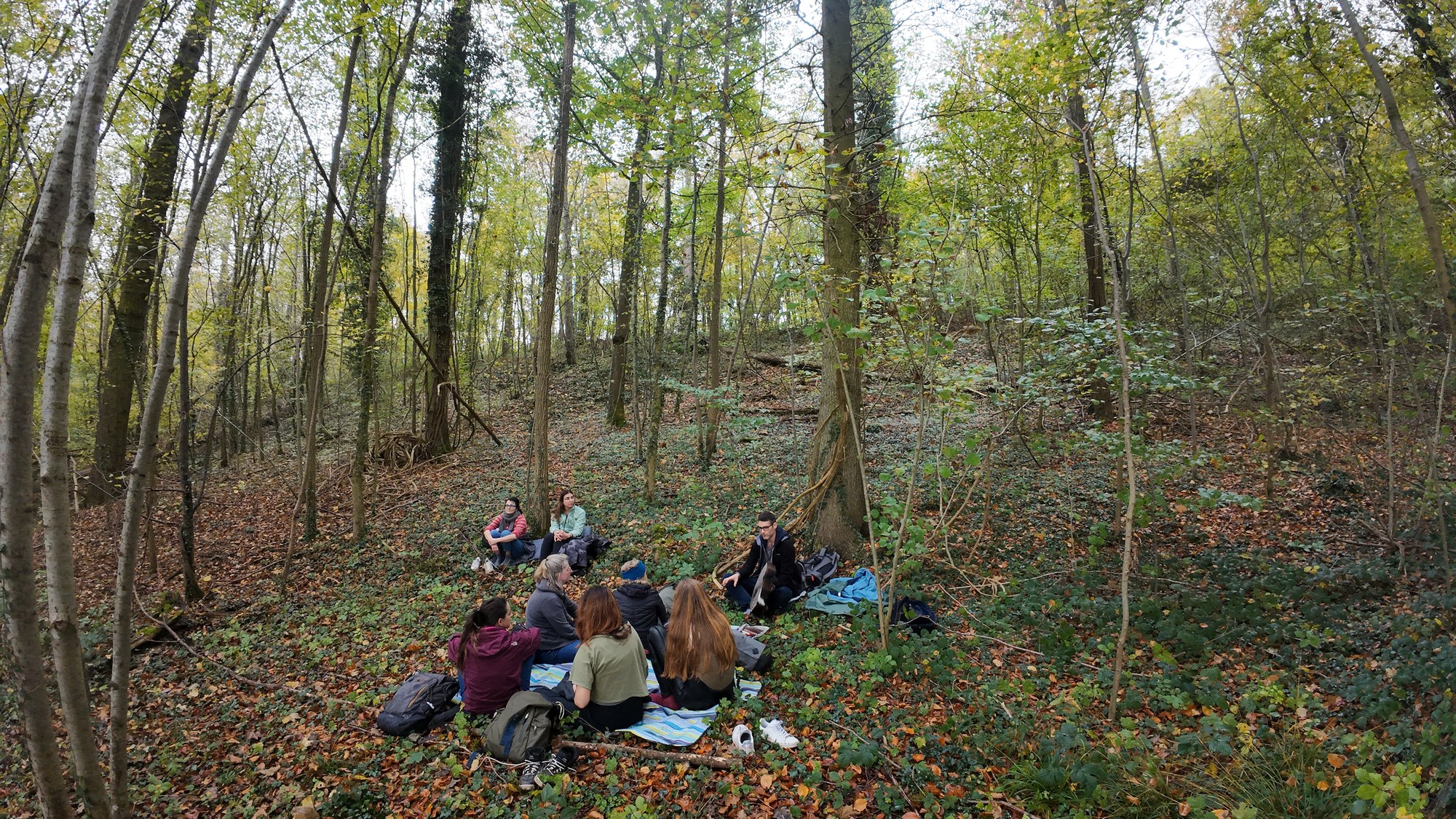
Imagine a tree entering autumn and refusing to release its dry leaves. It continues sending energy towards them, trying to preserve what no longer responds, while the branches remain covered with something that cannot grow again. There is no drama in the tree when the leaves fall. There is no shame. The tree is not failing. It is participating in the movement that makes the next season possible.
But we do something different. We keep thousands of dry leaves hanging from us and then wonder why we feel heavy, tired or unable to move. We say that we want a new life while using our energy to maintain the structure of the old one.

This is one of the hidden prices of refusing an ending: the old does not only remain behind you. It begins deciding what is possible in front of you.
Imagine that nothing changes during the next year. The same conversations, the same Sunday evening, the same promises to yourself and the same small contraction every time you refuse to say what you know. Letting go may be frightening, but remaining also has a price, and we rarely calculate it because it is paid slowly.
There is another cost, perhaps a deeper one. Every time you clearly feel that something is no longer true but continue acting as if it were, you weaken the relationship with your own perception. You teach yourself not to trust what you know. After some time, the confusion is no longer only about the relationship, the work or the decision. You begin doubting your capacity to recognize your own life.
Not everything difficult is dead
This requires honesty, because not everything that becomes uncomfortable has finished. Some relationships need a difficult conversation. Some projects need rest, correction or a new direction. Some commitments become demanding precisely because they are asking us to grow.
Leaving at the first moment of discomfort is not freedom. Sometimes it is another form of avoidance.
But staying indefinitely in something that has truly ended is also avoidance. It is the avoidance of grief, uncertainty and responsibility. It is an attempt to escape the pain of transition by accepting the slower pain of remaining where there is no longer any life.
You may need to sit quietly with the difference. When you imagine repairing this part of your life, is there still something alive that wants to participate? Is there love underneath the conflict, meaning underneath the exhaustion, or a genuine movement that has become blocked? Or are you trying to recover a feeling that disappeared a long time ago because you are frightened of what will happen when you stop trying?
Nobody outside you can answer this completely. Advice may help, and honest conversations can reveal things you were unable to see alone, but eventually there is a moment in which you must stop negotiating against your own knowing.
You know the particular silence that appears when something has finished. The words become repetitive. The promises no longer create movement. You can still perform the relationship, the job, the friendship or the role, but you cannot make it alive through effort alone.
Not everything difficult is dead. But when something is truly over, continuing to feed it does not bring it back to life.
Your life will contain endings
Look at nature. Everything appears, takes form, changes and disappears. This is not a defect in the universe. It is the universe we live in.
Still, we behave as if a successful life should be protected from endings. We want relationships that never change, identities that never crack and plans that confirm forever that we made the correct decision. Then life moves, as life always moves, and we interpret that movement as a personal failure.
An ending can be painful. It may bring grief, fear, anger, relief and the strange guilt of feeling lighter. You may miss what you had while knowing that you cannot return to it. None of this means you made the wrong decision. It means that something mattered and that your life is changing shape.
Understanding endings does not remove the grief. It removes the unnecessary punishment we place on top of it.
A successful life is not a life in which nothing ends. It is a life in which we learn to recognize what is alive, honor what has completed its time and stop sacrificing the future to preserve an appearance from the past.

The first threshold
If something came to your mind while reading this, do not rush to make a dramatic decision. You do not need to send a message tonight or destroy the structure of your life tomorrow morning. First, stop hiding the question.
Choose one thing that may already have ended. Write its name somewhere private and notice what appears in your body when you stop pretending that the question is not there. Do you feel fear, relief, resistance, sadness? Do not decide what to do with it yet. Simply allow yourself to recognize what you have been carrying.
Then ask yourself what continuing is costing you, what you believe the ending would say about you and what truth would eventually need to be communicated. This is already movement, because real transition begins when we stop using confusion to protect ourselves from what we know.
But letting go is not the end of the journey. Sometimes it is where the most important part begins.
Once the old is gone, there is a silence. The relationship has ended, the job is behind you or the identity that organized your life no longer works, but the new direction has not yet appeared. There is nothing familiar to return to and nothing solid waiting in front of you.
And what you do inside that silence can determine whether your life truly changes or simply rebuilds the same pattern with different names.
In Part II, we will explore the mistake many of us make immediately after an ending: we fill the empty space so quickly that the old pattern never has the chance to die. This is where a new relationship, job or project can slowly become another version of the life we just left.
Continue with Part II: You Let It Go. Why Does the Same Life Keep Coming Back?
This transition between what has ended and what has not yet begun is also the heart of our November retreat, The Sound of Silence. In the second part, I will take you inside this space and explain why learning to remain there may change the person who chooses what comes next.
The Sound of Silence · Belgian Ardennes · 19–22 November
A four-day retreat for letting go, crossing the silence and opening to what comes next.

1 thought on “You Know It’s Over. Why Are You Still Carrying It?”
Comments are closed.