There is a very direct way to understand why your life feels the way it feels: look at what you can express, and look at what you cannot express.
Not what you believe about yourself. Not the identity you have built. Not the story you tell when someone asks how you are doing. Look at expression in the simplest and most concrete way. Can you say no when your body knows it is no? Can you say yes when something in you is alive? Can you show anger without becoming destructive or collapsing into guilt? Can you ask for what you want? Can you receive love without hiding? Can you bring something new into a room without immediately shrinking under the fear of being judged?
This is not a small question. Expression is not only communication. It is the way your inner reality becomes your outer life.
When something inside you cannot be expressed, it does not disappear. It begins to shape you from the shadows. It becomes tension in the body, confusion in the mind, resentment in relationships, repetition in your choices, and a strange feeling that your life is happening around you but not fully through you.
And when something inside you can be expressed cleanly, it becomes life. It becomes a boundary, a movement, a decision, a conversation, a creation, a new path. Expression is how the soul enters the practical world.
This is why the ancient map of the chakras is so useful. Not because we need to turn life into a spiritual theory, but because it gives us a precise way to contemplate where our freedom is alive and where it is still contracted. Each center of the body expresses a different quality of life. Each one carries a doorway into freedom, and each one also carries a particular kind of fear.
In this article, we will explore six centers of expression: the body, desire, power, the heart, creativity, and truth. Together they reveal a very practical spiritual question:
What part of your life is truly yours, and what part has been built from what you were too afraid to express?

Expression, Karma and Dharma
Many people feel shame around the places where they cannot express themselves. They think it means they are weak, immature, broken, or not spiritual enough. But that is not a helpful way to look at it.
A deeper way is to see these limitations as karma.
Karma, in this sense, is not punishment. It is not a cosmic sentence. It is the pattern of contraction we arrive with, inherit, develop, repeat, and slowly learn to liberate. It is the place where life keeps showing us the same lesson, not because life hates us, but because something in us has not yet become free.
Dharma is the opposite movement. Dharma is what can already flow through us with naturalness. It is the quality we can express without too much inner conflict because it has already been integrated into our being. A mother may naturally feel and express love toward her child. A person may naturally speak with clarity in a professional setting. Someone may move their body, create music, solve problems, protect others, or bring humor into a room without feeling they are betraying themselves.
Where expression is natural, there is dharma. Where expression is blocked, there is karma asking to be understood.
This is important because it removes a lot of moral drama. If you cannot set boundaries, it does not mean you are a bad person. It means there is fear in the system. If you cannot show intimacy, it does not mean you have no heart. It means the heart has learned to protect itself. If you cannot say your truth, it does not mean you have no truth. It may mean you have spent years surviving by hiding it.
The problem is that what we do not express still participates in the creation of our life.
If you cannot say no, your relationships will be shaped by the absence of no. If you cannot express desire, your path will be shaped by the suppression of desire. If you cannot express anger, people may unconsciously cross your limits again and again. If you cannot express love, you may live surrounded by people and still feel profoundly alone.
Life responds not only to what we express, but also to what we suppress.
This is why self-expression is not a decorative spiritual topic. It is not about becoming louder, more visible, more charismatic, or more dramatic. It is about becoming real. It is about allowing your inner life to participate honestly in the creation of your outer life.
The Life You Create When You Do Not Express Yourself
There is a simple sentence that can change the way you look at your life:
When you do not express what is inside you, the life you create is not really yours.
It may look acceptable from the outside. It may even look successful. You may have the relationship, the job, the routine, the social role, the family structure, the identity. But if the important parts of you were never allowed to speak, choose, refuse, risk, desire, or create, then something in that life will feel foreign.
It will feel like a life built from adaptation.
This is especially clear with boundaries. Imagine someone in a relationship who repeatedly feels hurt by the way their partner speaks to them, but cannot say, "Stop. This is not okay for me." Perhaps they are afraid of conflict. Perhaps they are afraid of being abandoned. Perhaps they believe love means tolerating everything. Perhaps there is a deep social program inside them that says losing the relationship would be the greatest failure.
So they stay silent.
But silence is not neutral. Silence teaches the relationship how to continue. The other person may not even be fully conscious of what they are doing. They may simply keep entering through the door that was never closed. Over time, resentment grows. The person who could not express the boundary begins to feel trapped, unseen, and powerless. Eventually they may blame the other person completely.
Sometimes blame is necessary because harmful behavior must be named. But blame alone does not liberate the pattern. If the deeper lesson is the inability to express a boundary, the same situation will return in another form: with another partner, a boss, a friend, a family member, or a community.
This is not because we deserve mistreatment. It is because life is precise. It keeps showing us where our expression is not yet free.
The same happens with purpose. Many people want clarity about their life purpose, but they look for it only as an idea. They ask, "What should I do?" But the soul often reveals the path through what we can and cannot express.
Your desire shows you something. Your enthusiasm shows you something. Your resistance shows you something. The repeated pain in your relationships shows you something. The envy you feel toward people who are freer than you shows you something. The places where you become rigid, silent, tense, or ashamed show you something.
Purpose is not only a destination. It is also the liberation of the energy that has been trapped inside you.
From the point of view of the soul, the purpose of life is expansion beyond fear and limitation. Not expansion as ambition. Not expansion as constant achievement. Expansion as freedom: the freedom to be present, to feel, to choose, to love, to create, and to see clearly.
The six centers of expression give us a practical map for that expansion.
Chakra 1: The Body and Physical Freedom
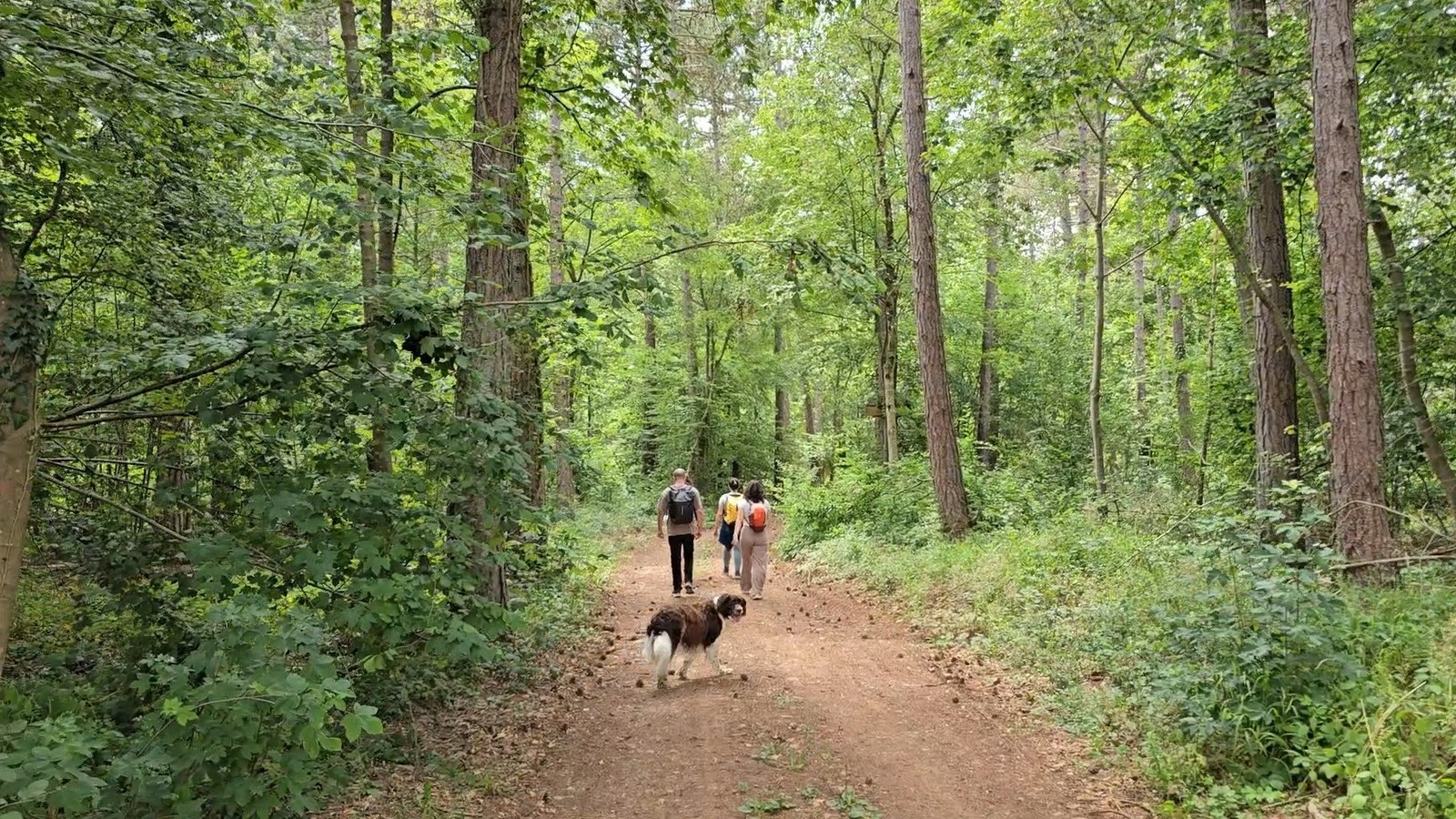
The first center of expression is the body itself.
Before we speak, before we explain, before we create a story about who we are, the body is already expressing. It expresses through posture, breath, movement, vitality, tiredness, tension, relaxation, contact with the ground, and the basic feeling of being allowed to exist.
This center is connected with survival, physical presence, safety, grounding, and belonging to the earth. Its expression is simple but profound: "I am here."
When this center is open, a person can inhabit the body without constant apology. They can take up space. They can rest when they need rest. They can move when life asks them to move. They can feel the animal intelligence of the body: hunger, fatigue, strength, instinct, the need for silence, the need for contact, the need to leave a place.
When this center is contracted, expression becomes disembodied. A person may live mostly in the head, disconnected from instinct and physical truth. They may ignore exhaustion, override discomfort, abandon their rhythm, or stay in situations their body already knows are wrong. They may feel unsafe in life in a very basic way, even when nothing obvious is happening.
Many people try to solve spiritual problems from the mind while the body is still saying, "I do not feel safe enough to be here."
The first center asks for honesty at the most concrete level. Can you feel your body? Can you trust its signals? Can you allow yourself to occupy physical space? Can you leave when your body knows it is time to leave? Can you arrive fully when your body knows it wants to arrive?
This is not primitive. It is foundational.
Without the expression of the body, the higher centers become abstract. We may speak beautifully about love, truth, purpose, or creativity, but the nervous system is still contracted. The body does not believe us yet.
Free expression begins by returning to the ground.
Chakra 2: Desire, Pleasure and Life-Force
The second center expresses desire, pleasure, sensuality, emotional movement, attraction, and the flowing quality of life.
This is the part of us that says, "I want." Not as a mental strategy, but as a felt movement. I want to taste this. I want to go there. I want to be close. I want to dance. I want to explore. I want to rest. I want beauty. I want contact. I want life to touch me.
For many people, this center is complicated because desire has been judged, shamed, controlled, spiritualized, or confused with selfishness. We learn early that some desires are acceptable and others are dangerous. We learn to become appropriate. We learn to ask what others want from us before we ask what is alive in us.
But when desire is repressed, life becomes dry.
A person may become responsible, functional, and even admired, while secretly losing contact with aliveness. They may do what is correct, but not what is juicy. They may follow the path that makes sense, but not the path that carries warmth. They may become good at pleasing others while losing the ability to feel what they actually prefer.
The second center is not about obeying every impulse. That would not be freedom; that would be unconsciousness. It is about being able to feel desire without immediately judging it, repressing it, or turning it into a problem.
Desire is information. It tells us where life wants to move.
Sometimes desire points to something simple: a walk, a conversation, a meal, a creative impulse, a place in nature. Sometimes it points to something deeper: a change in relationship, a new vocation, a different rhythm, a life with more beauty and less numbness.
When this center is blocked, we may ask others to choose for us. We may follow social scripts because our own preference is buried. We may avoid pleasure because pleasure makes us feel guilty. We may become rigid around sexuality, money, food, beauty, or rest. Or we may swing to the opposite extreme and chase stimulation because we are not actually connected to true desire.
The question here is:
Can you feel what you want without being enslaved by it or ashamed of it?
This is a delicate freedom. It requires maturity, because desire must be felt, respected, and integrated. But without it, purpose becomes theoretical. The soul does not move only through discipline. It also moves through attraction.

Chakra 3: Power, Choice and Responsibility
The third center expresses power.
Not domination. Not control. Not the need to win. Real power is the capacity to act from your center, to choose, to take responsibility, to say yes, to say no, and to create consequences in the world.
This is the center that allows you to say, "This is my responsibility, and this is not." It allows you to stop blaming everyone and begin to see the part you are playing in your own life. It allows you to recognize that your choices, your silence, your avoidance, your courage, your clarity, and your lack of clarity are all participating in what you are creating.
This can be uncomfortable, but it is also extremely liberating.
Without this center, spiritual work becomes passive. We may understand many things, feel many things, and speak about energy, healing, or transformation, but when life asks us to make a decision, we collapse. We wait. We explain. We hope someone else will change. We avoid the confrontation that would actually restore our dignity.
The third center is where boundaries become action.
For example, it is one thing to feel that something is wrong in a relationship. It is another thing to express it. It is another thing again to act in alignment with that expression. If someone repeatedly speaks to you in a way that hurts you, the third center gives you the force to say, "This does not work for me," and then to stop participating in the same dynamic.
This is where many people discover fear. Fear of abandonment. Fear of conflict. Fear of losing status. Fear of being alone. Fear of being seen as selfish. Fear of disappointing the family, the group, the partner, the boss, or the image they have created.
That fear is not a personal failure. It is a contraction. It is karma becoming visible.
The third center asks:
Can you express your will without violence and without apology?
Can you make a choice and accept its consequences?
Can you stop outsourcing your life to the expectations of others?
When this center opens, life becomes more honest. Not necessarily easier, but cleaner. You stop waiting for permission to be aligned. You stop blaming life for the results of choices you were too afraid to make. You begin to feel that your life is responding to you because you are finally participating in it.
Chakra 4: The Heart, Love and Emotional Digestion
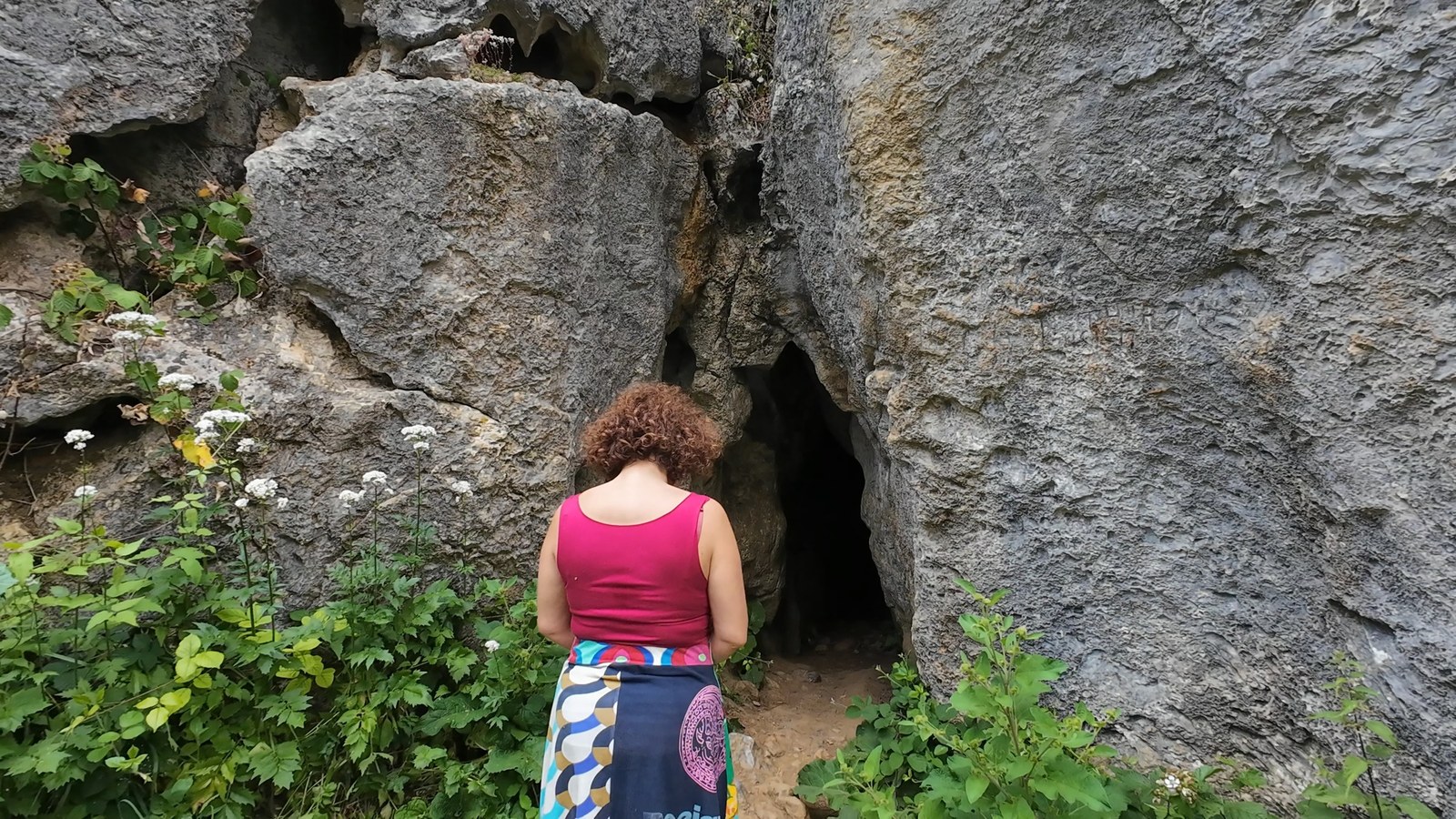
The fourth center expresses the heart.
This is not only romantic love, and it is not only kindness. The heart expresses intimacy, vulnerability, emotional truth, tenderness, grief, beauty, devotion, and the capacity to include life without immediately contracting.
When the heart is open, we can say "I love you" and mean it. We can say "I feel hurt" without turning it into an attack. We can let someone matter to us. We can perceive beauty not only as something pleasant, but as meaning. The beauty of a person. The beauty of a path. The beauty of a family, a tribe, a moment, a life.
The heart is also where many of the deepest wounds live.
As children, we often enter life with emotional openness. We want to play, love, touch, trust, express, and belong. But we enter a world full of judgment, rules, shame, correction, comparison, and emotional immaturity. Many of the strongest traumas are not only the dramatic events. They are the moments when the heart was open and what came back was judgment.
So the heart closes.
Not because it is weak, but because it is intelligent. It closes to survive intensity it could not digest. Later, as adults, we may discover that we can talk about emotions without really expressing them. We can analyze love without letting love move through us. We can be in relationships while avoiding the vulnerability that would make the relationship real.
This is one of the reasons intimacy is so difficult.
Real intimacy asks us to open the place where we have stored shame, grief, longing, tenderness, fear, and beauty. It asks us to stop hiding behind irrelevant conversations, mechanical routines, productivity, irony, spiritual concepts, or emotional distance. It asks us to let another person see something true.
For many people, this feels like opening a box they have spent years keeping closed.
The question of the heart is:
Can you feel and express what is emotionally true without abandoning yourself?
Can you be vulnerable without becoming dependent?
Can you love without using love as a way to escape your own center?
The heart does not replace boundaries. It needs them. Without the third center, the heart becomes codependent. Without the heart, the third center becomes hard. Together, they allow a person to be loving and clear, tender and strong, open and rooted.
Chakra 5: Voice, Creativity and the Inner Child
The fifth center is often called the center of expression, but in reality all the centers express something. The fifth center has a more specific gift: it expresses the new.
This is the center of creativity, spontaneity, voice, play, humor, invention, and unexpected movement. It is the part of us that brings something into the field that was not there before: a sentence, a joke, a song, a new idea, a new way of dressing, a new direction, a new conversation, a new experiment.
This is why the fifth center is so connected with the inner child. The child lives close to the new. For a child, life is not yet a fixed script. A stick can become a sword, a forest can become a kingdom, a sound can become a song, a question can open a universe. The child does not need everything to be useful before it is expressed.
As adults, we often lose that freedom.
We become scripted. We repeat the same conversations, the same reactions, the same roles, the same acceptable opinions. We learn what can be said in this family, this workplace, this community, this social identity. We learn where originality is welcomed and where it is punished. We learn to feel the fear that appears when something new wants to come through us.
That fear can be intense.
If you express something new, people may judge it. They may misunderstand it. They may laugh at it. They may call it childish, strange, inappropriate, too much, not enough, unrealistic, or embarrassing. This is why many people are more comfortable being competent than being creative. Competence often repeats what is already accepted. Creativity risks bringing something that has not yet been approved.
The fifth center asks:
How free do you feel to be spontaneous?
How free do you feel to say something different?
How free do you feel to change the script of your life?
When this center is blocked, life becomes repetitive. The same days, the same loops, the same conversations, the same emotional climate. The soul begins to suffocate because it wants freshness. It wants discovery. It wants to participate in life as a living movement, not as a mechanical routine.
Many people try to access this freedom through alcohol or other forms of disinhibition. For a few hours, the inner critic relaxes. They speak more freely, joke more, flirt more, dance more, touch more, risk more. That shows something important: the freedom exists. But if it depends on losing consciousness, it is not yet integrated.
The deeper path is conscious spontaneity: the ability to express the new while remaining present, awake, and responsible.
Chakra 6: Truth, Vision and Inner Alignment
The sixth center expresses truth.
Not absolute truth. Not the final truth of the universe. This center expresses your individual truth: your perception, your inner seeing, your understanding of what is meaningful, what is false, what is alive, what is dead, what is aligned, and what is no longer aligned.
This is a very high form of expression because it governs the way you see your life.
When this center is open, you can recognize what is true for you even when it is inconvenient. You can see that a job is draining you. You can see that a relationship is based on fear. You can see that a path once served you but no longer does. You can see that you want more silence, more freedom, more responsibility, more love, more space, more depth, or more honesty.
When this center is blocked, you may not only hide your truth from others. You may hide it from yourself.
This is one of the most subtle forms of suffering. A person says, "I do not know what I want," but sometimes the deeper truth is, "I am afraid of what I already know." They say, "I am confused," but underneath the confusion there may be a truth that would change too much if it were fully seen. It could disturb the relationship, the family, the work, the social image, the business, the identity.
So the truth is covered.
But when you do not express your truth, you slowly stop seeing it. The inner vision becomes foggy. You begin to follow the flow of other people's expectations. You do what makes sense to everyone else, but your own life begins to lose meaning. You can become very functional and deeply disconnected at the same time.
The sixth center asks:
Can you admit what you see?
Can you recognize your truth before you know what to do with it?
Can you express it in the right way, at the right time, without using fear as the reason to bury it?
This does not mean saying everything to everyone. That is not wisdom. Truth needs timing, context, compassion, and intelligence. If your truth is that life is sacred and human beings are here to learn how to love beyond fear, you do not need to announce that in every supermarket queue.
The point is not compulsive honesty. The point is inner alignment.
Never hide your truth from yourself because you are afraid of the consequences of seeing it.
A Practice for Contemplation
This map is not meant to become another system of self-judgment. It is a way to play consciously with your own life.
You can sit with each center and ask:
What can I express freely here?
What do I suppress here?
What happens in my life because I suppress it?
What fear appears when I imagine expressing it?
Where has life been trying to teach me this lesson again and again?
The answers do not need to be dramatic. Sometimes the most important insight is very simple: "I do not say no." "I do not let myself want." "I avoid conflict." "I hide my sadness." "I am afraid to be spontaneous." "I already know the truth, but I do not want to see it."
That honesty is gold.
It gives meaning to where you are. It shows you that your life is not random. It reveals the relationship between your inner expression and your outer reality. It also gives you a direction, because the next step of your path is often hidden inside the expression you are avoiding.
This is why self-expression is not about performing a personality. It is about liberating the soul from contraction.
Your soul wants to be free from fear and limitation. It wants the return to that state we knew as children, not by becoming childish, but by becoming consciously free: open, creative, present, spontaneous, intimate, grounded, and clear.
The path back is not abstract. It happens in your body, your desires, your choices, your heart, your voice, and your truth.
Every time you express what is real with presence and responsibility, your life becomes a little more yours.
And that is the beginning of freedom.
If this reflection speaks to something alive in you, you can stay close to the Inner Spark path through the Inner Spark WhatsApp community, or go deeper with the Inner Spark Tribe academy on Skool.