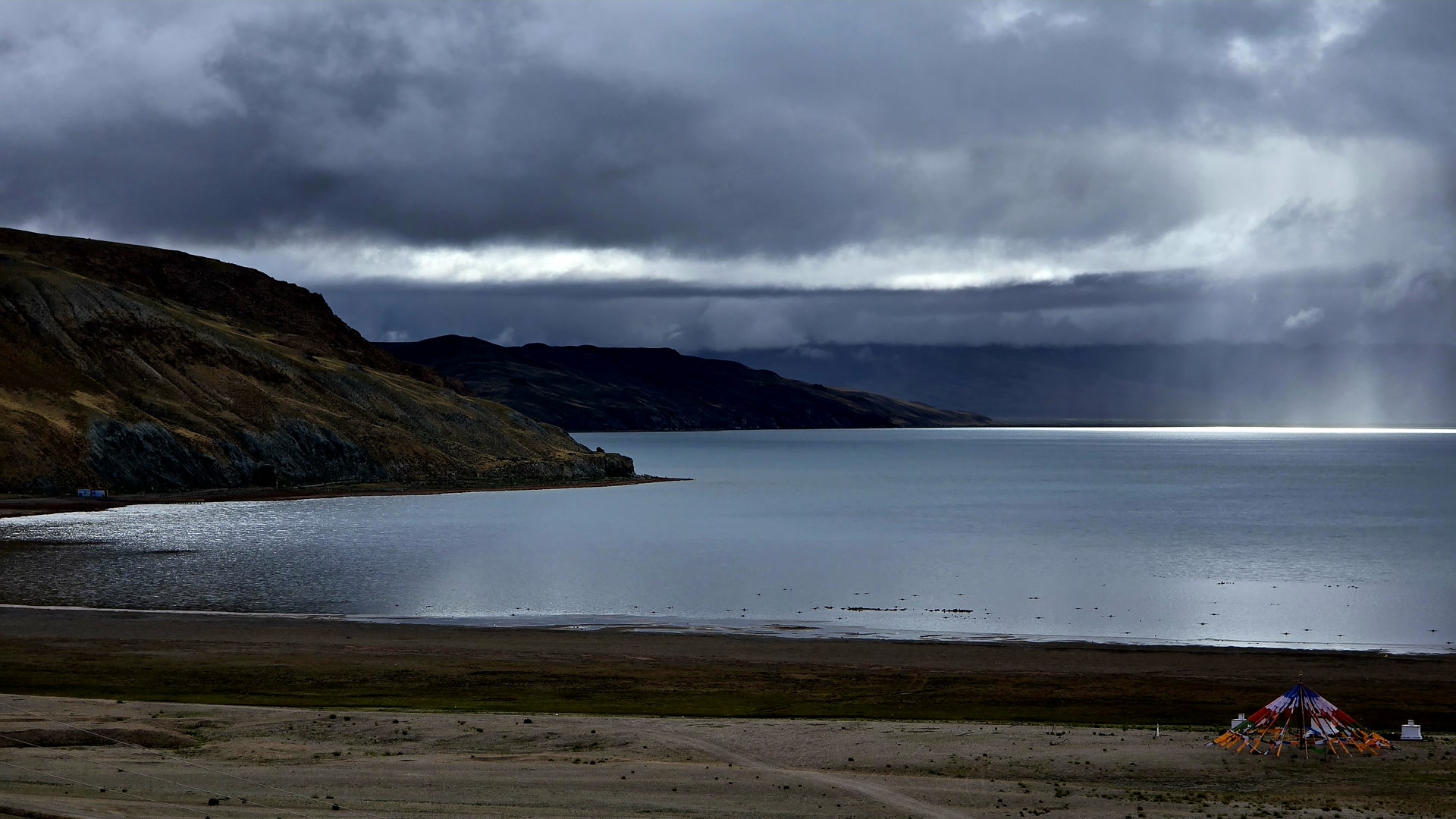
This is the end of our journey through Tibet, and we are standing in one of the strangest and most powerful places of the entire pilgrimage: Rakshastal, traditionally known as the Poison Lake. In front of us stretches a vast body of salt water, almost lifeless, surrounded by a completely bare and silent landscape. Its shape resembles a crescent moon, and for centuries the legends of this region have connected it with dark forces, extreme ascetic practices, intense powers, and everything that remains hidden.
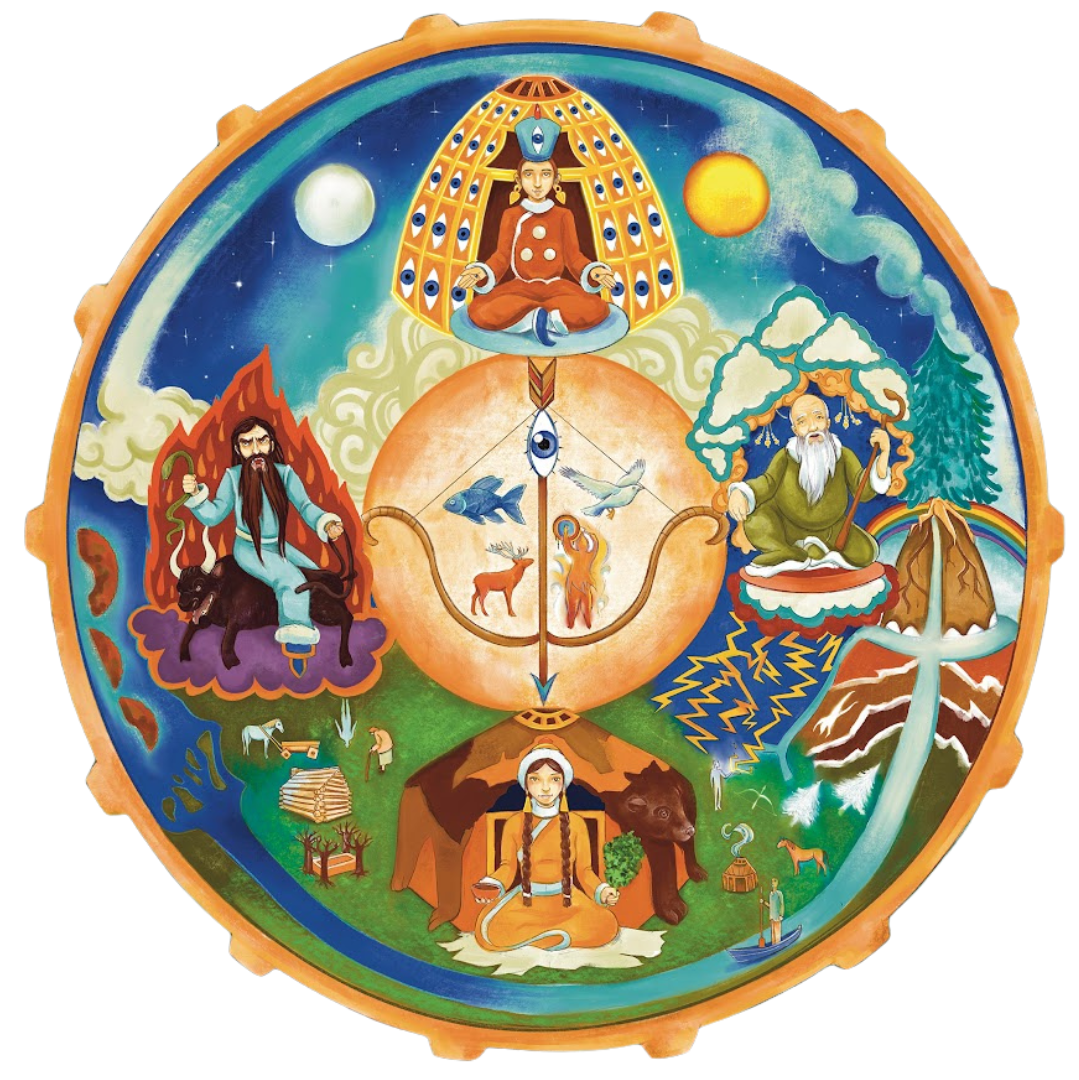
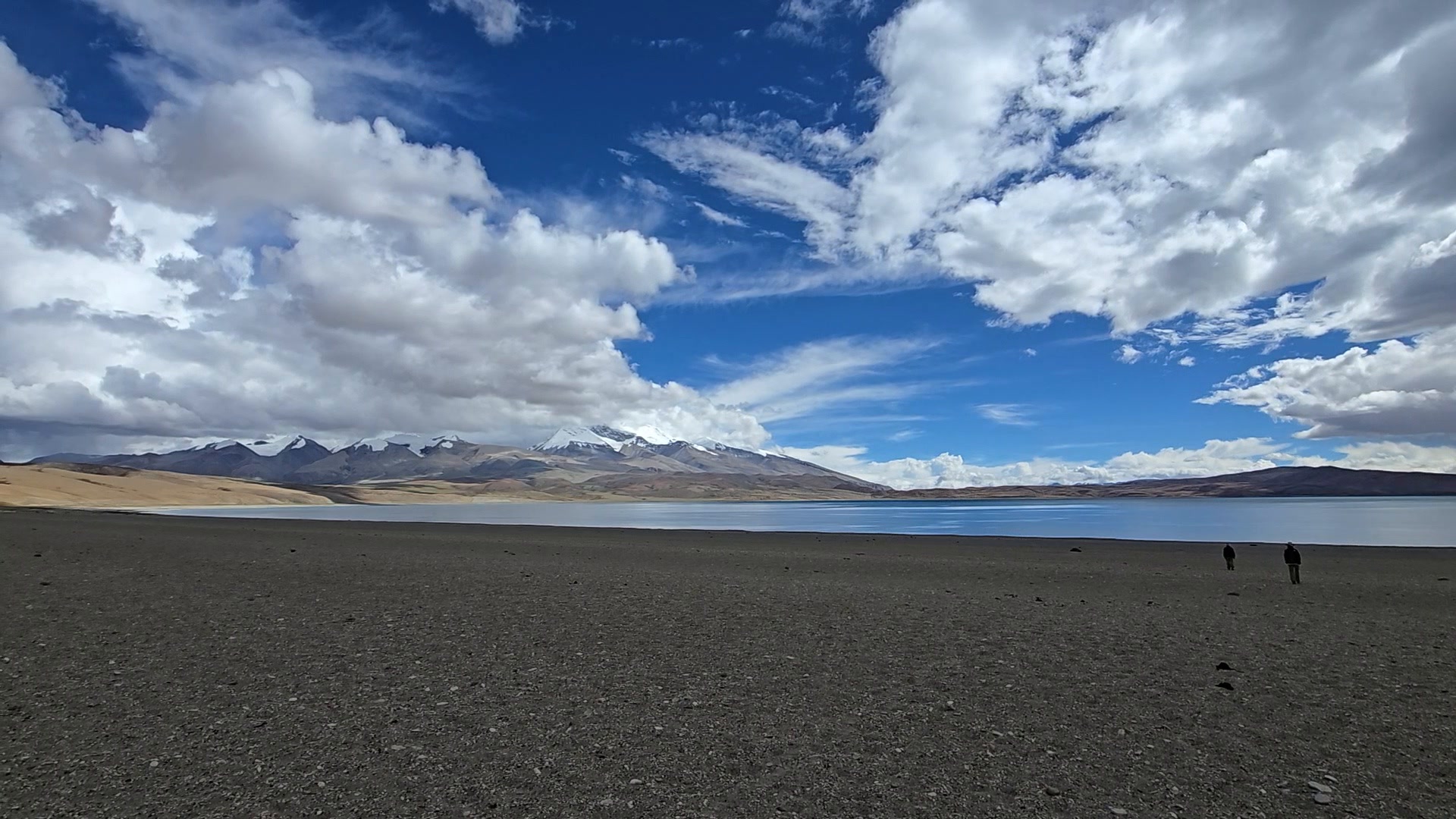
Very close to it lies Manasarovar, one of the most sacred lakes in the Himalayas. The contrast between the two is difficult to ignore. Manasarovar holds fresh water, life and movement. For generations it has been a source of water for communities and pilgrims, and it occupies a central place in the spiritual traditions connected with Mount Kailash. Rakshastal and Manasarovar appear as two opposite forces standing side by side: the moon and the sun, night and day, the hidden and the conscious.
This duality is part of the sacred geography of the place itself. Rakshastal represents what remains in darkness, what has not yet been integrated, the raw forces that exist outside the space of our awareness. Fear, anger, desire, insecurity, pain, and all those experiences that at some point were too intense to be fully understood or digested. We may try to avoid them for years, but they continue to act from deep inside us, influencing our decisions, our emotions, our relationships and our reactions.
Manasarovar represents the opposite movement: consciousness observing, recognizing and making space for what was previously hidden. There is also a natural connection between the two lakes. When the waters of Manasarovar rise enough, they can flow towards Rakshastal through the channel that joins them. Within the spiritual understanding of this landscape, the image is incredibly powerful: the waters of the sacred lake entering the Poison Lake, consciousness entering what was hidden in darkness.
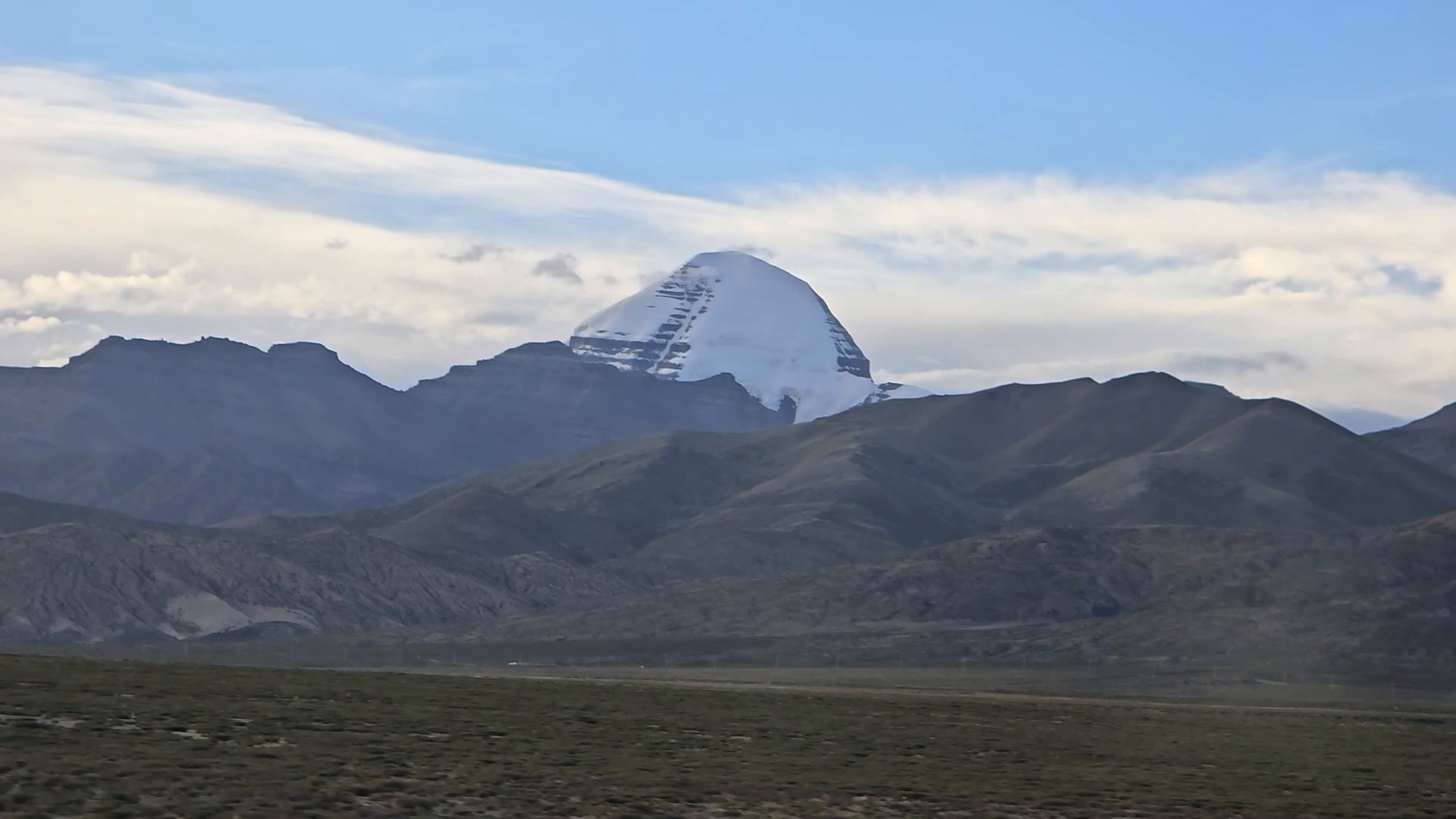
And behind both of them rises Mount Kailash.
The Gateway to Mount Kailash
The two lakes form the great gateway towards one of the most sacred mountains in Asia. For the different traditions that have travelled here for centuries, Kailash is not simply a mountain. It is a spiritual axis, a place of transformation, and a territory you approach only after passing symbolically through these two dimensions of human experience. Before reaching the mountain you first encounter light and darkness, the conscious and the unconscious, life and what seems to contain no life at all.
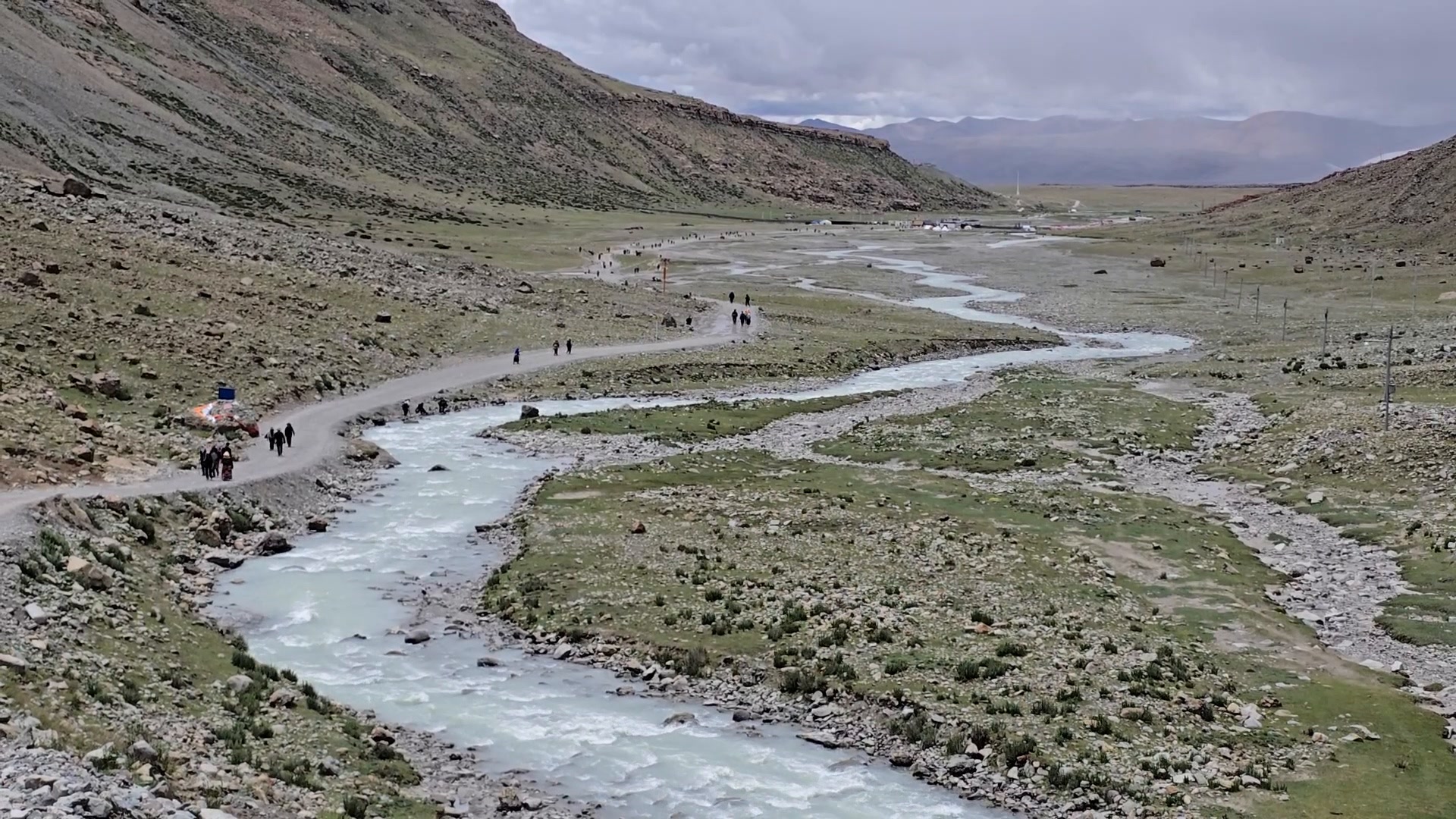
Two weeks ago we performed the Kora around Mount Kailash, the great pilgrimage that circles the mountain. The route takes you for many kilometres through an extreme high altitude landscape, eventually crossing Dolma La Pass at more than 5,600 metres. On paper it can look like a difficult trek. Once you are inside it, it stops feeling like a trek. It becomes something else.
The mountain starts removing your layers.
When the Storm Comes
We walked for hours carrying our backpacks while the weather kept changing around us. The sky closed in, the wind came, then the rain, then the cold. At some point we were completely soaked and every step started becoming heavier. Wet clothes stuck to the body, the hands became colder and breathing became shorter and harder because of the altitude. The landscape was enormous and incredibly beautiful, but there was nothing comfortable about it. The mountain was not there to protect us or adapt to us. We had to adapt to it.
Then the storm came.
Wind, rain, cold, exhaustion. The feeling of vulnerability became stronger, and together with it came the first real doubts. Will we be able to continue tomorrow? Will we have enough strength to cross the pass? What happens if the weather gets worse? What if the body does not respond?
We spent a night where those questions stopped being abstract thoughts.
They were in the body.
And that is when our demons started coming out.
Not mystical demons. Not external beings.
Ours.
The weakness we normally hide. The fear of not being capable. The anger that appears when things stop obeying us. The insecurity. The frustration. The desire to quit. The part of us that wants to return to a safe place. The part that needs to control what is going to happen in order to feel calm.
When life is comfortable we can keep many of these things below the surface. We can even convince ourselves that we have already worked through them, that they are no longer there. But when the body is exhausted, you are cold, you are wet, there is less oxygen and you know that the next morning you still have to climb above 5,600 metres, some of those layers break.
And what was inside starts coming out.
Entering the Poison Lake
This is what it means to enter the Poison Lake.
Not looking at it from the shore. Not talking about it. Entering it.
Allowing what is hidden to surface.
Because the dark lake does not contain only beautiful things waiting to be discovered. It also contains everything we have learned to avoid. Our helplessness. Our vulnerability. Our anger. Our fear. The stories we tell ourselves when we believe we cannot continue. The exact place where our confidence begins to break.
That night was part of the pilgrimage as much as the climb the following morning.
Maybe even more.
We slept with the storm outside and another storm inside. And by morning there was no spectacular revelation. The fear had not disappeared. We had not magically recovered all our strength.
We simply got up.
We got dressed.
We put the backpacks on again.
And we continued.
That was all.
But sometimes transformation begins exactly there.
Not when fear disappears, but when you take the next step while still feeling it.
The Next Step at 5,600 Metres
We started climbing towards Dolma La, breathing slowly, managing every movement. At that altitude the body forces you to stop thinking in kilometres. There is only the next step. You breathe, you walk a little, you stop. You breathe again. Someone passes you. Someone falls behind. Sometimes someone helps you and other times you somehow find enough strength to support the person beside you.
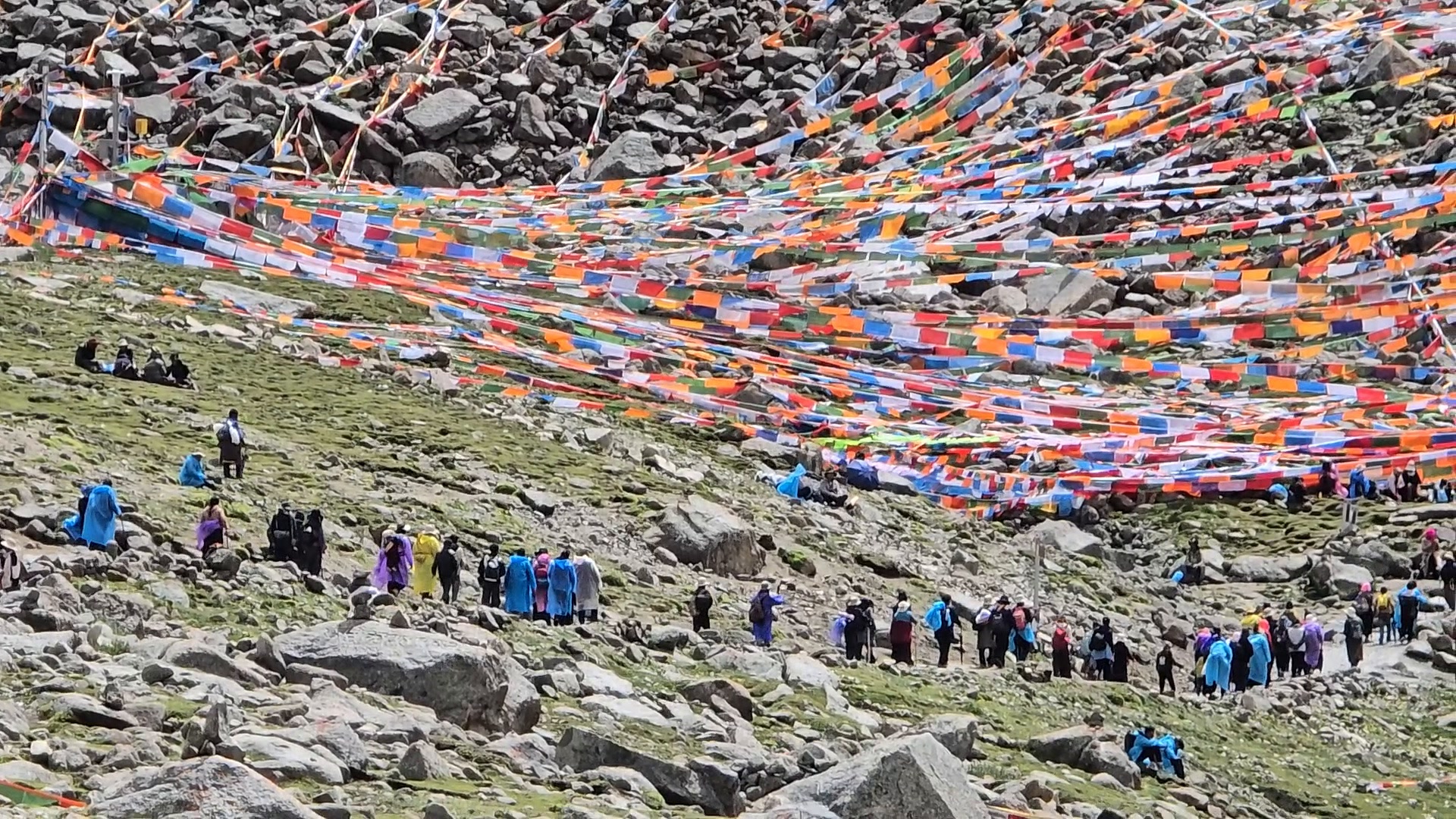
Around us, hundreds of Tibetan pilgrims were doing the same journey. Some walked slowly, some prayed, some moved forward performing full prostrations on the ground. Watching them completely changes your relationship with your own suffering. Every person is carrying something. A story, a loss, a prayer, an intention, an entire life.
We kept climbing.
And every metre seemed to bring something else to the surface.
The anger came out.
The fear came out.
The weakness came out.
The resistance came out.
The need to control came out.
And little by little we began to understand that maybe the process was not about preventing these things from appearing. Maybe the process was exactly the opposite. Let them appear, and keep moving through them.
Bring out what lies at the bottom of the lake.
Bring it to the surface.
Breathe with it.
Look at it.
Walk with it.
Crossing Dolma La
Because as long as a part of us remains buried in that dark lake, it continues to hold power from underneath. It continues shaping our decisions without needing to reveal itself. But once something rises to the surface, once it can be consciously felt, our relationship with it begins to change.
Eventually we reached the pass.
Dolma La.
More than 5,600 metres above sea level.
After the rain, the wind, the cold, the exhaustion, the doubts and everything that had appeared inside us, we were there.
And the feeling was not simply that we had reached the top.
It was the feeling that we had crossed something.
We had entered our night and we had not stayed there.
We had looked at weakness and kept walking.
We had felt fear and kept walking.
We had felt anger and kept walking.
We had not defeated those parts of ourselves. We had carried them with us all the way to the top.
And that changes the whole experience.
What We Carry Back
After crossing the pass we began the descent. Close to the top, beside the sacred lake that appears immediately after Dolma La, we left our prayer flag and a Tibetan khata carrying our intentions for life: more truth, more power, more confidence, more authenticity.
At that moment those words were no longer just wishes.
They had been tested.
Because asking for confidence after walking through fear means something different. Asking for power after seeing your own weakness means something different. Asking for authenticity after facing the parts of yourself you normally hide means something different.
We had brought something out of the Poison Lake.
And now we could carry it back with us.
This is the deeper meaning of the journey. Entering the Poison Lake, entering the night, touching what is hidden and moving through it until it can return to consciousness. It is not about destroying darkness or trying to turn every difficult experience into something positive. It is about recovering what became separated from us.
Because those unconscious places do not contain only pain. They also contain strength, instinct, desire, creativity, the capacity to choose, and an enormous amount of energy that became trapped together with experiences we were once unable to integrate. As long as that energy remains hidden, it also remains unavailable to us.
The Spiritual Adventure of Descent and Return
Very often we learn to do exactly the opposite. We try to live only in the Lake of the Sun. We search for wellbeing, peace, safety, pleasant experiences and elevated states of consciousness while keeping anything uncomfortable at a distance. But the great spiritual traditions have never spoken only about remaining in the light. They also speak about descent, darkness, confrontation with the unknown, and return.
The spiritual adventure begins when we stop trying to escape these parts of ourselves and enter them consciously. Because whatever we refuse to look at continues to have power over us. When we are able to see it, feel it and move through it, something starts changing. We recover freedom, the ability to choose, and a much deeper relationship with our own life.
That is what makes this place so extraordinary. Rakshastal, Manasarovar and Kailash seem to form a natural architecture of the spiritual process. First come the two lakes, the two polarities. Then, behind them, the mountain. It is difficult to move through this landscape without understanding why people have travelled here for centuries to pray, meditate, walk and search for transformation.
A pilgrimage is not about abandoning your life. It is about temporarily stepping outside the structures that keep your life always the same, so you can discover what exists underneath them. And then you return. You return to your relationships, your work, your projects and your decisions, but you bring something back with you that was hidden before.
This same principle will be at the heart of our next pilgrimage in February, in La Gomera. The landscape will be completely different. Instead of the extreme altitude of Tibet, we will have ancient forests, volcanic mountains, ocean, beaches and the presence of a much more fertile and intimate nature. But the inner movement will be the same.
We will spend six days walking, working with nature, practicing and consciously entering those spaces that normally remain underneath our everyday life. The purpose is to reveal, observe and embrace what lives in our own night, dissolve some of the obstacles that separate us from our strength, and return to life with more clarity, more confidence and a much deeper sense of our own path.
This is the sacred movement of pilgrimage.
To enter, to cross, and to return.
Maybe our soul does not want a completely predictable life. Maybe it also needs mystery, challenge, discovery and moments where we have to enter territories within ourselves that we still do not know.
Because every time we consciously enter one of those places, a part of our power comes back with us.