
You can have a clear dream and spend years making choices that take you in the opposite direction. One part of you wants to move forward. Another wants to stay comfortable. Another needs everyone to be happy with you. And while each part takes its turn deciding, your life moves somewhere you never really chose.
This is why I want to talk about leadership. Even if you don’t run a business or manage a team. Even if your first reaction is, “I don’t want to lead anyone.”
That was my reaction too when I first encountered these teachings. I wanted to be with my soul, with my spirit, to follow my path and find truth in my life. Leading other people? No, come on. That wasn’t for me.
What I hadn’t understood was that there was already a group inside me that needed direction.
Different Parts of You Want Different Things
Observe yourself and you’ll see it. You want to get fit, but you also want to stay in bed. You want a deep relationship, while other desires pull you somewhere else. You want to build something meaningful, but today you want to go out, and tomorrow… we’ll see.
There’s nothing strange about this. We have different desires, different tendencies, parts of ourselves that see life differently. In shamanism, we can speak about spirits. You can also understand this simply as the different parts of you. What matters is noticing how they act and which one is making the decisions.
Think about a team where everyone has their own idea of the goal and does whatever they want. One person moves in one direction, another moves in the opposite direction. They might all be working hard, but their efforts cancel each other out. There’s plenty of activity, yet the team isn’t getting anywhere.
The same thing can happen inside you. If every desire takes over whenever it appears, you end up creating an accidental life.
You can choose to live without a particular destination, open to whatever comes. I’m not saying that’s wrong. But you also need to take responsibility for the consequences of that choice. If you have a dream, if you want your life to move in a certain direction, you need to learn how to lead yourself there.
And whether you want followers or not, your way of living influences others. Your children, your partner, your friends. We teach each other all the time, including when we aren’t trying to teach anything.

For me, this leadership begins with five qualities.
1. Give Your Energy a Specific Direction
If you don’t know where you want to go, where are you going to lead yourself?
You need a clear goal. Something specific enough that you can check whether you’ve done it. “I want to change my life” might express a very real desire, but it doesn’t tell you what to do today. And today is when all those different parts of you will start negotiating.
Your dream can be big. You want to travel around the world, discover different countries, experience another way of living. Good. Now bring that dream into a concrete decision: start saving a certain amount, open a savings account for the journey, or look for work that will allow you to support it. Your dream needs a plan that reaches into your day.

Without that direction, the space doesn’t stay empty. Other people’s priorities take over. Or whatever feels urgent. Or the part of you that wants to feel good immediately, even if the choice takes you further from what you actually want.
A goal doesn’t have to be a prison. It helps you bring together efforts that were scattered before. You can look at what you’re doing and recognise: this is taking me closer, this is taking me somewhere else.
2. Take Responsibility Without Punishing Yourself
A leader knows they aren’t perfect. That’s why they want to learn. When something goes wrong, they’re willing to look at the connection between the result and what they did, decided, or didn’t do.
The question can be uncomfortable: “What did I do, or fail to do, that contributed to this?”
Taking responsibility doesn’t mean condemning yourself or pretending that everything in the world is under your control. It means honestly looking at your part, where you have one. If you only complain about what happened, you can miss the place where you still have the power to act.
Perhaps you avoided a necessary conversation. Perhaps you knew you needed to prepare and kept postponing it. Or you made a decision without wanting to look at its consequences. Seeing this can hurt, of course. But now you understand something you didn’t want to see before. You have something to work with.

Responsibility helps you learn from what happened. Blaming yourself again and again keeps you attached to it. You need to recognise that difference if you want to guide yourself, and if other people are trusting you to guide them.
3. Don’t Let Despair Make Your Important Decisions
There are moments when everything inside you says there’s nothing you can do. You’re angry, you reject everything, you start judging. And suddenly certain ideas seem very convincing: leave, quit, break it all apart, abandon the path.
This is an important teaching: recognise that state and don’t automatically hand it the important decisions of your life.
You can listen to what you feel. You can make room to go through it, speak about it, understand what’s happening. But an intense emotion doesn’t have to become an instruction you immediately follow. Sometimes you need time to recover the ability to see beyond the problem in front of you.

It’s the same when you’re guiding other people. If a wave of anger or despair moves through the group, leadership includes being able to stay present without joining the impulse to destroy everything. Setting a limit when necessary, while giving people room to work through the crisis.
Afterwards, you can review the direction. Perhaps something really does need to change. The difference is being able to choose with clarity, rather than being carried away by the reaction of the moment.
4. Stay Steady When There Is Resistance
Not every part of you will be happy with what you need to do. You have to accept this. If you wait until every part agrees, you might be waiting a very long time.
You’ve decided to wake up early and train. The alarm goes off, and one part wants more sleep. Another wants to stay home drinking coffee. You start negotiating something that seemed completely clear yesterday. This is where you need the ability to hold your decision, even while part of you complains.
The same thing happens with other people. Sometimes you’ll make a decision that someone doesn’t understand or finds uncomfortable. If you can’t tolerate that discomfort, if you need everyone to approve of what you do, you’ll keep changing direction to calm each reaction.
One step forward, one step back. You try to satisfy every desire and every expectation. Overall, you don’t move.
This takes emotional strength. It also takes a willingness to listen. Holding your position doesn’t mean closing yourself to other perspectives or believing you’re always right. You can reconsider a decision when you understand something new. But changing because you’ve learned something is very different from giving in because you can’t bear someone being unhappy with you.
5. Know Who You’re Trying to Lead
You can’t guide a group well if you don’t know the people in it. You need to understand their abilities, their fears, where they struggle. And exactly the same applies to you.
Do you know which situations make you give up? Can you recognise the explanations you start making when you’re afraid? Have you observed which choices drain your energy and how long it takes you to recover your momentum?
Perhaps you know that certain nights out lead to two days disconnected from everything you wanted to do. Once you’ve observed that pattern, you have information you can use before making the choice. You don’t need to keep repeating it and be surprised by the same result every time.
Knowing yourself takes time and attention. You observe how you act, what you choose, what happens to your energy afterwards. Sometimes you need rest. Other times you’re avoiding something. From the outside they can look similar, and you need enough honesty with yourself to recognise the difference.
This is why leadership has no fixed recipe for every situation. It depends on the person, the circumstances, and the particular part of you that needs guidance. Without awareness, even a useful rule can become something you follow without understanding.
You Train These Qualities in Your Daily Life
If you want to move towards your dreams but keep losing your way, come back to these qualities. Look honestly at where you need practice. You might know exactly what you want but struggle to stay steady when resistance appears. Or you might have plenty of energy to act without having decided where to go.
Understanding this while you read isn’t enough. These capacities need training, like a muscle. You develop them when you make a conscious choice in a situation where you used to react without noticing.
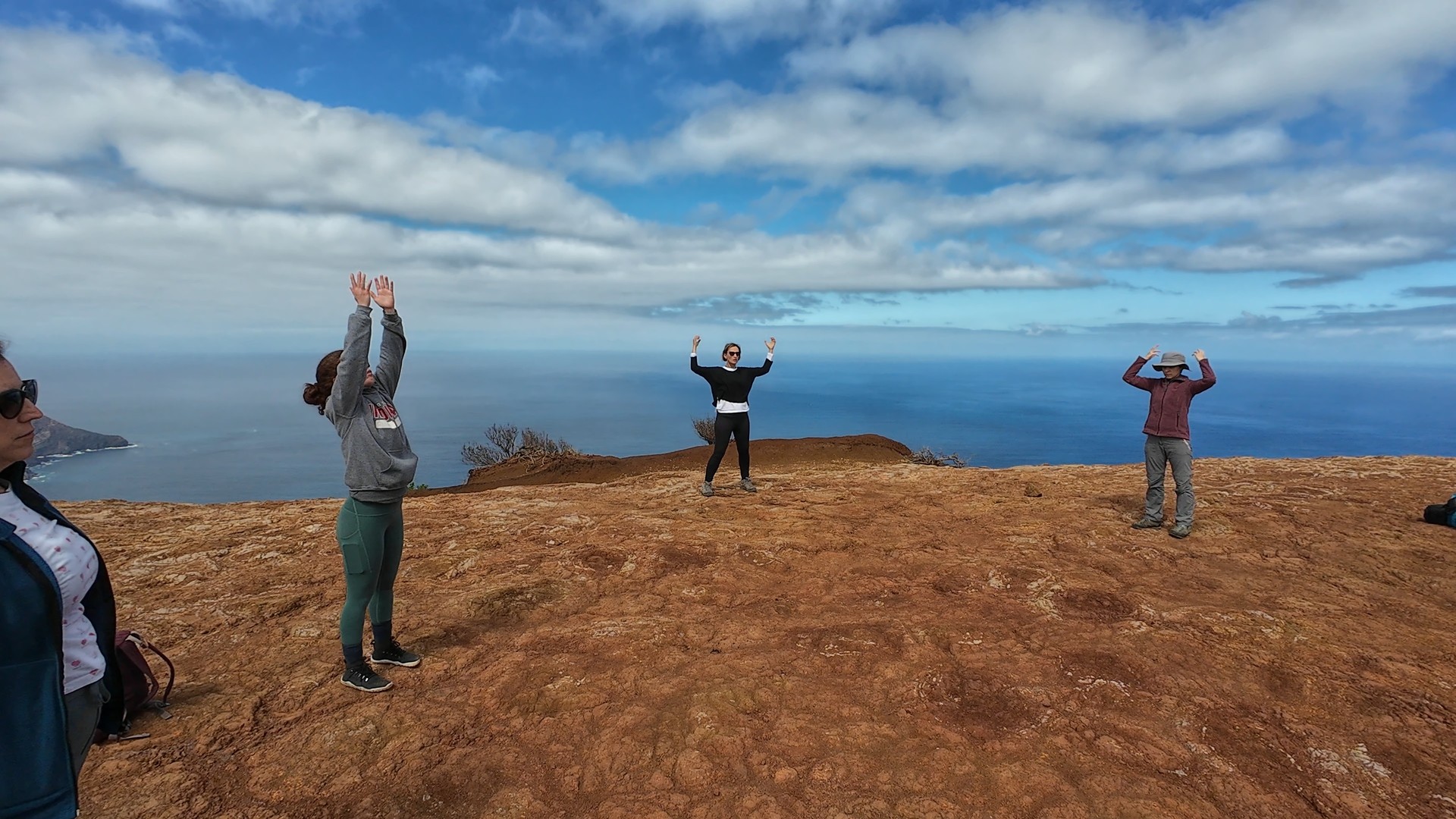
This is also the work I want to bring into our retreat in La Gomera, from 12 to 17 February 2027, dedicated to the seven steps of manifestation. We’ll work with leadership, vitality, and the strength of the spiritual warrior: the strength you need when difficulties come and you have to hold your direction. For me, the connection with the earth and fire of this island is part of that practice.

My intention is for you to return home with more clarity about what you want to do and the energy to bring it into your life.
If it’s calling you, you’ll find the dates, the details and the booking page here: Spiritual Adventure in La Gomera, February 2027. And if you have questions, write to me. We can talk before you decide.
Meanwhile, start close to home. Choose a goal that genuinely matters to you and observe what happens inside when it’s time to act. You’ll find a lot of what we’ve been talking about right there. That’s where you can begin to practise.